Posts

Showing posts from July, 2025

🛋️ Relaxing Spots in Hokkaido — A Soothing Journey Across Japan’s Northern Land

Image
Wide open skies. Time that flows gently. Hokkaido is filled with places where your heart can truly take a deep breath. This article is for those who aren’t just looking to sightsee , but to slow down and heal . Let us introduce five of the most peaceful, heart-soothing “mattari” (relaxing) spots in Hokkaido—loved by locals and travelers alike.✨ ① Biei — Rebalancing Your Soul in the Patchwork Hills When you think of idyllic Hokkaido scenery, Biei immediately comes to mind. Its gently rolling hills and colorful fields look like something out of a painting. From spring through autumn, the landscape transforms into a living patchwork quilt.🎨 🧭 Best way to enjoy it? Take a slow drive, stop at scenic viewpoints, and don’t rush . Breathe deeply, let the breeze brush your face. That’s all you need in this place.🍃 ② Lake Toya — Soak in Onsen and Let the Everyday Fade Surrounded by crystal-clear waters and quiet mountains, Lake Toya is made for deep relaxation. Hot spring inns ...

🍵 Japan and the Art of “Mattari”: The Gentle Beauty of Doing Nothing

Image
When we speak of Japan, certain images often come to mind— the beauty of the four seasons, a refined culture, and a unique sensitivity to “ma” (the space between things). Among these, one of my favorite aspects of Japan is the quiet, unhurried moments of "mattari." This isn’t about rushing from one sightseeing spot to another. It’s not about posting every moment on social media. It’s simply about being still, being present, and letting yourself be gently held by the soft air of Japan. 🧘 What Is “Mattari”? The word “mattari” doesn’t have a perfect English translation, but it evokes a warm, gentle sense of calm—a kind of cozy stillness. It’s when you sit in a café with a steaming cup of coffee, chatting quietly with a friend. It’s when you watch a cat sunbathing in a tatami room, doing absolutely nothing. It’s a culture that values not doing —without guilt. No rush, no pressure. Just a quiet appreciation of the moment. It’s a feeling closely tied to the spirit ...

⚔️ The Legend of Loto Lives On – Visiting the "Monument of Loto" on Awaji Island

Image
 For fans of video games—especially Dragon Quest lovers —there’s a sacred place you must visit: the “Monument of Loto” on Awaji Island. Standing quietly by the sea, swaying in the ocean breeze, this stone monument carries a powerful message: The beginning of adventure, the end of a journey, and the simple truth that it’s okay to chase your dreams. 🗺️ Where Is It? How Do You Get There? You’ll find the Monument of Loto in the northern part of Awaji Island , in Awaji City, Kusumoto. It’s close to other attractions like Awaji Yumebutai and Nijigen no Mori —and easily accessible by car 🚗🌉 The monument stands on a quiet beach overlooking the Seto Inland Sea. With the sound of waves and the sea breeze surrounding you, it’s a legendary landmark nestled deep within nature’s embrace. 🧙‍♂️ What Is the Monument of Loto? The stone is engraved with the following words: “This stone monument rising in this land bears the mark of Loto. You who have come here, forget ...

⛩️ Why Shrines Soothe the Soul – A Gentle Place to Return to Yourself

Image
 On days when you feel a little tired, when things don’t go quite right, for some reason, your feet take you to a shrine . You walk the path, pass through the torii gate, and quietly put your hands together. And then—your heart begins to feel lighter. But why is it that shrines have this calming effect on us? 🌳 1. A Place Where You Become One with Nature Shrines were originally places where nature itself was worshipped as sacred. That’s why within the shrine grounds, you’ll find towering trees, clear water, moss-covered stones, and the gentle rustle of wind. It’s as if the breath of nature flows through the entire space. Without realizing it, we’re healed by the rustling of leaves, birdsong, the scent of the earth. When you say, “I feel calm at a shrine,” it might be because your heart is synchronizing with the rhythm of nature 🍃 🧘‍♀️ 2. Silence and Stillness That Realign the Heart Unlike our noisy daily lives, shrines are quiet places. Voices are hushed, cars ...

🇯🇵 47 Prefectures, 47 Personal Impressions – A Colorful Map of Japan

Image
 I’ve traveled to all 47 prefectures in Japan. Each place has its own colors, flavors, and emotions— and here, I’ve captured one unique impression for every single one. From the great north to the tropical south, let’s explore the rich diversity of Japan together 🗾🍱🍃 🟧 Hokkaido Region Hokkaido : Everything here is on a different scale—nature and food that will leave you speechless! 🍣⛰️ 🟥 Tohoku Region Aomori : Nebuta festivals and apples—fiery and sweet at heart 🍎🔥 Iwate : Grand nature and deep history, quietly touching your soul 🍃 Miyagi : Where beef tongue and samurai elegance coexist beautifully 🥩🌊 Akita : Namahage demons surprise you, but hot springs heal you ♨️👹 Yamagata : Cherries and Zao mountains turn your heart a lovely shade of pink 🍒⛄ Fukushima : The pride of Aizu and heartwarming people leave a deep impression 🏯💕 🟨 Kanto Region Ibaraki : Hitachi Seaside Park—where sea and sky stretch endlessly 🌊☁️ Tochigi : The grandeur of Nikko paire...

🗾 I’ve Visited All 47 Prefectures in Japan – Here Are My Top 5 Picks!

Image
 Yes, I’ve been to all 47 prefectures in Japan. People often ask, "Why so many?" or "Was it for work?" But the truth is simple: I just wanted to go. I wanted to see, feel, and understand Japan with my own eyes. And while every place had something truly special— today I’m sharing my personal Top 5 that deeply moved me as a travel lover. ※Please note: These rankings are just based on my emotional experience 😊 🥇 1st Place: Hokkaido Paradise of Nature & Food If I had to choose just one, it would be Hokkaido—hands down. The freedom to explore, the overwhelming nature, and the incredible food scene… it has it all. 🌲 Breathtaking Natural Scenery Lavender fields in Furano, primeval forests of Shiretoko, patchwork hills in Biei Each season brings a different magic: snowy drift ice in winter, cool retreats in summer 🍽 A Treasure Trove of Deliciousness Seafood bowls in Otaru & Hakodate: Uni (sea urchin) from the morning market = heaven ...

🇯🇵 I Visited All 47 Prefectures in Japan – And It Changed My Life

Image
 When I say, "I’ve been to all 47 prefectures in Japan," people often react with surprise. Some ask, “Was it for work?” or “Why go to so many places?” But the answer is simple: I just wanted to go. I wanted to see with my own eyes what kind of country Japan really is. 🌟 The Joy of Having 47 Places I'm Glad I Visited Life has its ups and downs, but with every trip I’ve taken, one thing becomes clear: Every place in Japan has its own unique air, its own heartbeat. Like the quiet moments spent staring into the wetlands of Kushiro, Hokkaido . Or the lively night of drinking at a street stall in Fukuoka . Or sipping matcha in peaceful silence at the Higashi Chaya District in Ishikawa . These moments are burned into my memory— and they all made me feel, “I’m so glad to be alive.” I’ve had that feeling in all 47 prefectures. And that, to me, is an incredible gift. 🏘 Finding a Sense of Belonging in Places I Didn’t Know Travel isn’t just about tourist spots....

👑 What Is the Japanese Emperor? A Symbol of Peace, History, and National Unity

Image
 When people hear, “Japan has an Emperor,” many feel an immediate sense of uniqueness and wonder. The Japanese Emperor is part of the oldest hereditary monarchy in the world , a continuous lineage believed to stretch back over 2,600 years . In this article, let’s explore what the Emperor’s role is today, and why this tradition is such a source of quiet pride for the Japanese people. 🇯🇵 What Is the “Tennō System”? The term “Tennō” (天皇) refers to the Emperor of Japan, and the “Tennō System” describes the structure and cultural framework that supports this role. Under the current Constitution of Japan , the Emperor is described as: “the symbol of the State and of the unity of the people.” (Article 1) In other words, the Emperor holds no political power . Instead, he represents tradition, stability, and a spiritual center for the Japanese people. 🌏 Why Is the Emperor So Respected Worldwide? 🔸 The World’s Oldest Continuous Monarchy While many are familiar with t...

🌍 Why Travel Abroad? Because It Changes You Inside

Image
 People often ask me, “Why do you travel overseas?” My answer is simple: When you see the world outside, your inner world transforms. And that alone makes life feel a little richer. 🌱 Realizing How Small Your World Used to Be Living in Japan, we often view things through the lens of “common sense.” But once you step outside the country, that “common sense” gets turned upside down—fast. Buses not arriving on time? Totally normal. Strangers talking to you on the street? Friendly and expected! Napping during lunch break? A part of the culture. These everyday differences make you realize: “What I thought was normal… was only normal here .” At first, it’s a bit shocking—maybe even embarrassing. But then comes this feeling of freedom. And that’s the beginning of change. 💎 Different Values Aren’t Threats—They’re Treasures Talking with people from other countries often reveals unexpected viewpoints. But instead of denying them, you learn to say: “That’s a new ...

🎌 The Heart of Japan: Why Anime Is More Than Just Entertainment

Image
 Today, let’s talk about one of Japan’s most beloved cultural treasures: anime 🎥✨ In Japan, anime is loved by both children and adults alike. But did you know that Japanese anime is now capturing hearts all over the world? Anime isn’t just a form of entertainment. It’s filled with life lessons, warmth, dreams, and hope —all wrapped in stunning art and emotional storytelling🌏💖 🎨 Anime Is Japan’s “Art” and “Language” What makes Japanese anime so unique? Its diverse genres and emotional depth . Here are just a few examples: For children : Doraemon , Anpanman Youth and school life : Your Name , Anohana Fantasy & adventure : Demon Slayer , Attack on Titan , Fullmetal Alchemist Slice of life : K-On! , Non Non Biyori Social commentary : Psycho-Pass , Monster Each anime tells a story full of laughter, tears, and life lessons . Anime is like a second language— a visual language that connects people across cultures through shared emotions. It’s truly e...

💧 Temizuya: The Sacred Water Ritual Before Meeting the Gods

Image
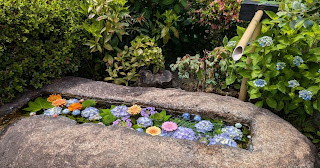
 If you’ve ever visited a Shinto shrine in Japan, you may have noticed a small structure along the path with water flowing and wooden ladles neatly lined up. This is called the Temizuya (or Chōzuya )—a place to purify your hands and mouth before entering the sacred grounds. But why do we cleanse ourselves with water? And what’s the meaning behind this gentle ritual? Let’s explore the practice of temizu , and the quiet beauty of the Japanese spirit it reflects🍃 🫧 What Is Temizu? Temizu (literally “hand water”) is a ritual of purification performed before standing before the divine. It’s not just a religious custom. It’s a way to: Wash away the dirt from the outside world Calm the mind and spirit Prepare oneself to enter a sacred space with humility In other words, temizu is an invisible preparation—an act that clears not only the body, but also the heart. 🧴 How to Perform the Traditional Temizu Ritual (Note: Many shrines now simplify or adapt the ritual ...

🧧 The Mystery of the “Kyō” Fortune: Why Getting a Bad Omikuji Isn't Bad at All

Image
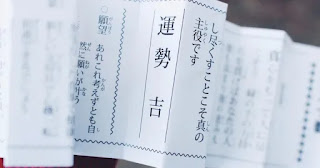
 Have you ever drawn an omikuji —those paper fortunes you find at shrines and temples in Japan, especially during New Year's? 🎍 They’re fun for a bit of luck-checking, a peek into the future, or even just for some emotional support. But what if the slip says... “凶 (Kyō)” — bad luck ? Your heart sinks. “Oh no… is this year doomed?” Don’t worry! It turns out that Kyō isn’t just bad news—it’s also full of unexpected wisdom and hidden opportunity. 🎲 How Often Does “Kyō” Actually Appear? It varies depending on the shrine or temple, but here are some rough numbers: Some places include Kyō in 10–30% of their omikuji. Others have no bad fortunes at all ! Famous temples like Senso-ji in Asakusa (Tokyo) are known for a relatively high chance of getting Kyō 😅 Some people (like me) even keep drawing until they get Daikichi —“great blessing” 💸 But here’s the surprising part: Kyō isn't just a losing ticket. 🧘‍♀️ Kyō Means “You’re at the Bottom—So There’s Nowh...

⛩️ What Is a Torii? The Gentle Gateway Between Worlds

Image
 You’ve probably seen them during your travels in Japan—tall, red gates standing at the entrance of shrines. These are called torii , and while they’re familiar sights, have you ever stopped to wonder what they really mean ? Today, let’s explore this beautiful symbol of Japan and the quiet wisdom it carries. ⛩️ A Torii Marks the Beginning of the Sacred A torii is more than just a decorative gate—it’s a boundary. It marks the transition from the human world to the realm of the gods. In modern terms, you could think of it as the “front door” to a divine home. That’s why people naturally straighten their posture when passing through, offering a small bow before entering. It’s a graceful Japanese custom that says, “I’m entering with respect.” 📜 Where Does the Word “Torii” Come From? Interestingly, no one knows the exact origin of the word torii . But here are a few popular theories: It may come from the idea of a perch for sacred birds—“tori” (bird) + “i” (to sit). ...

The Gentle Gesture of Japan: Understanding the Art of Bowing

Image
When people from overseas visit Japan, one thing that often catches them off guard is how natural and frequent bowing is in everyday life. You’ll see people bowing at stations, in stores, at temples, at work—it seems to happen everywhere, and between everyone. But bowing isn’t just a formality. It’s a quiet but powerful gesture packed with kindness, respect, and consideration—values deeply rooted in Japanese culture 🌼 🙇‍♀️ Bowing: A Message That Speaks Before Words Before words are spoken, we bow. It’s how we first show our heart to someone. Whether it's: “Hello” (Konnichiwa) “Thank you” (Arigatou gozaimasu) “I’m sorry” (Gomen nasai) “Please and thank you” (Yoroshiku onegaishimasu) All of these thoughts can be expressed with just one simple movement. Isn’t that a beautifully delicate and meaningful way to communicate? ✨ 🤝 Not Submission, But Alignment of Hearts At first glance, bowing may seem like putting oneself below the other. But in Japan, bowing is...